by admin | Feb 19, 2011 | Blog, Content, Design, Promotion, Strategy
A Brand Positioning Statement, also known as a slogan or a strap line, is the creative interpretation of the Brand Promise or USP which we discussed earlier.
Brand (Positioning Statements) should be able to hold their position in the long run and ideally achieve the following 4 criteria:
- Differentiate the business (Communicate the USP)
- Provide a Creative (Campaignable and Sustainable) platform
- Benefits should be ideally expressed explicitly to the customer
- Provide support to the brand name
Even when designing a brand from scratch it is difficult to satisfy all 4 criteria, so meeting 3 for a new brand or even 2 during a re-brand is often a great result.
You need to communicate with:
- Clarity
- Consistency
- Compression
to ‘cut through’ the clutter that is now prevalent in most service and product categories to consumers who are bombarded by more commercial messages than ever before!
So how do we do this?
Firstly we need to “own “own” a place in the consumer mind.
the easiest and most effective way of “owning a place in your customers’ and prospects’ minds is to focus on the things that matter. Most small and medium enterprises do not have the time or the money to be all things to all people, in fact neither do the very big companies, and when they try, they end up meaning nothing to anybody.
The result is at best mediocrity.
Focus demands Sacrifice – To own something you need to give up something else.
Focus on the particular type of buyer. Markets consist of buyers who differ in their:
- Wants
- Resources
- Locations
- Buying attitudes
- Buying behaviours
Simplicity adds value, by adding a halo effect for other benefits:
- Simple benefit (the most important promise) oriented word works best no matter how complex the product or market.
- The word must be exclusive.
- Avoid change, personalities don’t change, neither should your Brand.
- Positioning takes years and people don’t really change.
Next we will illustrate the power of brand positioning and focus with some examples.
How 2 Players Effectively communicated their Brand Positioning
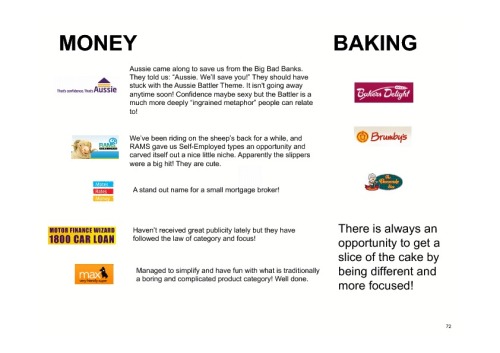
Here are 2 industries and examples how the different players have through focus have found their niche and then effectively communicated their brand positioning.
Examples of the segmentation and brand positioning in the car…
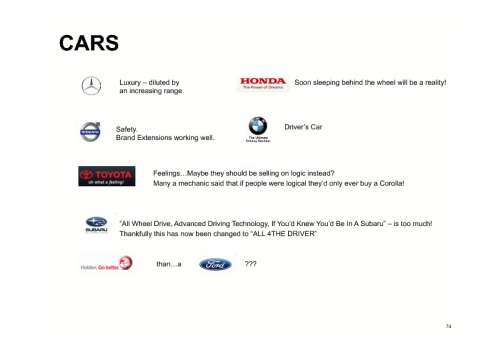
Examples of the segmentation and brand positioning in the car industry.
Positioning examples through segmentation in the car insurance…
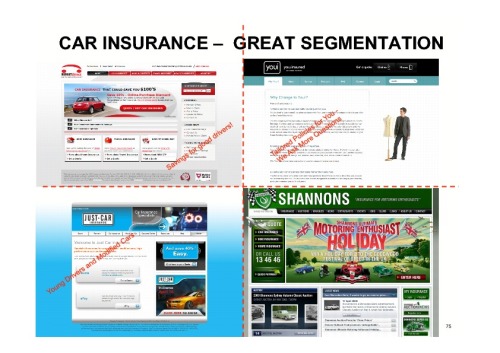
Positioning examples through segmentation in the car insurance category.
Most of the builders don’t have a positioning statement…
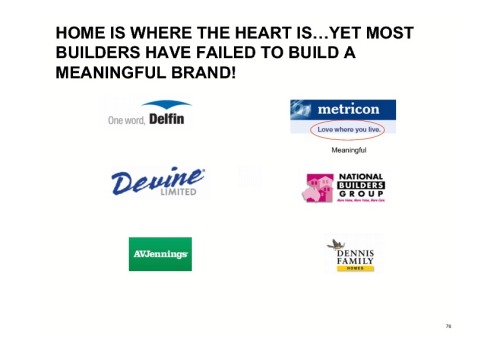
Most of the builders don’t have a positioning statement and are missing out on a great opportunity to truly connect with their prospects as well as be able to develop creative and more effective communication.
There is always an opportunity to be the “first”…
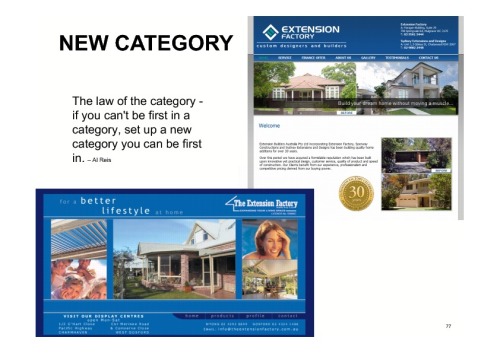
There is always an opportunity to be the “first” through even more focus. At the same time one has to be careful to protect their brand name!
…and then you can focus some more!
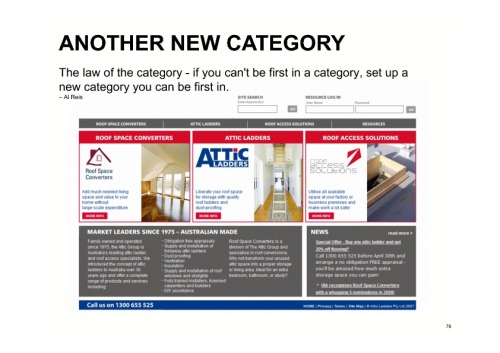
…and then you can focus some more!

by admin | Feb 4, 2011 | Blog

They differentiate you from competitors, make an emotional connection with your audience, and help to build a brand that ignites the passions of your customers.
Yet most SME business owners are either frivolous about the naming of their business or alternatively spend countless days “brainstorming” without any direction or objective and have no method of evaluating their chosen short list of names.
Does your Brand Name:
- Achieve separation from your competitors?
- Demonstrate your difference?
- Reinforce a unique positioning platform?
- Create positive and lasting engagement with your audience?
- Make you unforgettable?
- Propel itself through the world on its own, becoming a no-cost, PR generating vehicle?
- Provide a deep well of marketing and advertising images?
- Have the potential to dominate a category?
Igor International is a specialist naming agency in San Francisco that has developed a comprehensive brand naming guide – which just illustrates the power of specialisation and focus!
Their naming guide is essential reading for any entrepreneur or SME Marketer, or in fact any marketer facing the task of developing this critical business asset. The guide provides a number of evaluation criteria that will help evaluate your short list of names. From how memorable the name is to how it sounds and looks, how it works in positioning your company and to how appropriate it is in actually conveying your business benefits.
Here we will summarise their process, which is almost identical to the overall brand development, including brand Positioning and Positioning Statement (Slogan):
1. Competitive Analysis
Make sure your chosen name is significantly different to the way others in your category name their business. Most SME’s in the services category still use the naming convention that is as old as business itself…their own name! Just look at any of the service categories and you’ll find accountants and architects through to engineers and lawyers and most consulting companies still using this outdated principle that misses out on all of the opportunities we described earlier to propel your business into the spotlight!
2. Positioning
The more focused your positioning is, the more effective the name will be. All great product and company names work in concert with the positioning of the businesses they speak for.
3. Name/Brand Development
Use positioning strategy to figure out what you want your new name to do for your communication efforts.
4. Trademark / Domain Name
Determine the likelihood that your company will be able to secure the name and a website domain, which is now one of the toughest tasks with so many names and even 2 to 3 word expressions being registered by domain name squatters!
5. Creative/Testing
Produce creative materials to test leading name candidates.
6. Name and Tagline
Final names and taglines, along with a well-defined positioning strategy, are the outcome of the process.
In the next entry we will examine some examples of good and bad brand names.
 Image via Wikipedia
by admin | Feb 4, 2011 | Blog, Strategy
Brand Names differentiate you from competitors, make an emotional connection with your audience, and help to build a brand that ignites the passions of your customers.
Yet most SME business owners are either frivolous about the naming of their business or alternatively spend countless days “brainstorming” without any direction or objective and have no method of evaluating their chosen short list of names.
Does your Brand Name:
- Achieve separation from your competitors?
- Demonstrate your difference?
- Reinforce a unique positioning platform?
- Create positive and lasting engagement with your audience?
- Make you unforgettable?
- Propel itself through the world on its own, becoming a no-cost, PR generating vehicle?
- Provide a deep well of marketing and advertising images?
- Have the potential to dominate a category?
Igor International is a specialist naming agency in San Francisco that has developed a comprehensive brand naming guide – which just illustrates the power of specialisation and focus!
Their naming guide is essential reading for any entrepreneur or SME Marketer, or in fact any marketer facing the task of developing this critical business asset. The guide provides a number of evaluation criteria that will help evaluate your short list of names. From how memorable the name is to how it sounds and looks, how it works in positioning your company and to how appropriate it is in actually conveying your business benefits.
Here we will summarise their process, which is almost identical to the overall brand development, including brand Positioning and Positioning Statement (Slogan):
1. Competitive Analysis
Make sure your chosen name is significantly different to the way others in your category name their business. Most SME’s in the services category still use the naming convention that is as old as business itself…their own name! Just look at any of the service categories and you’ll find accountants and architects through to engineers and lawyers and most consulting companies still using this outdated principle that misses out on all of the opportunities we described earlier to propel your business into the spotlight!
2. Positioning
The more focused your positioning is, the more effective the name will be. All great product and company names work in concert with the positioning of the businesses they speak for.
3. Name/Brand Development
Use positioning strategy to figure out what you want your new name to do for your communication efforts.
4. Trademark / Domain Name
Determine the likelihood that your company will be able to secure the name and a website domain, which is now one of the toughest tasks with so many names and even 2 to 3 word expressions being registered by domain name squatters!
5. Creative/Testing
Produce creative materials to test leading name candidates.
6. Name and Tagline
Final names and taglines, along with a well-defined positioning strategy, are the outcome of the process.
In the next entry we will examine some examples of good and bad brand names.
Image via Wikipedia
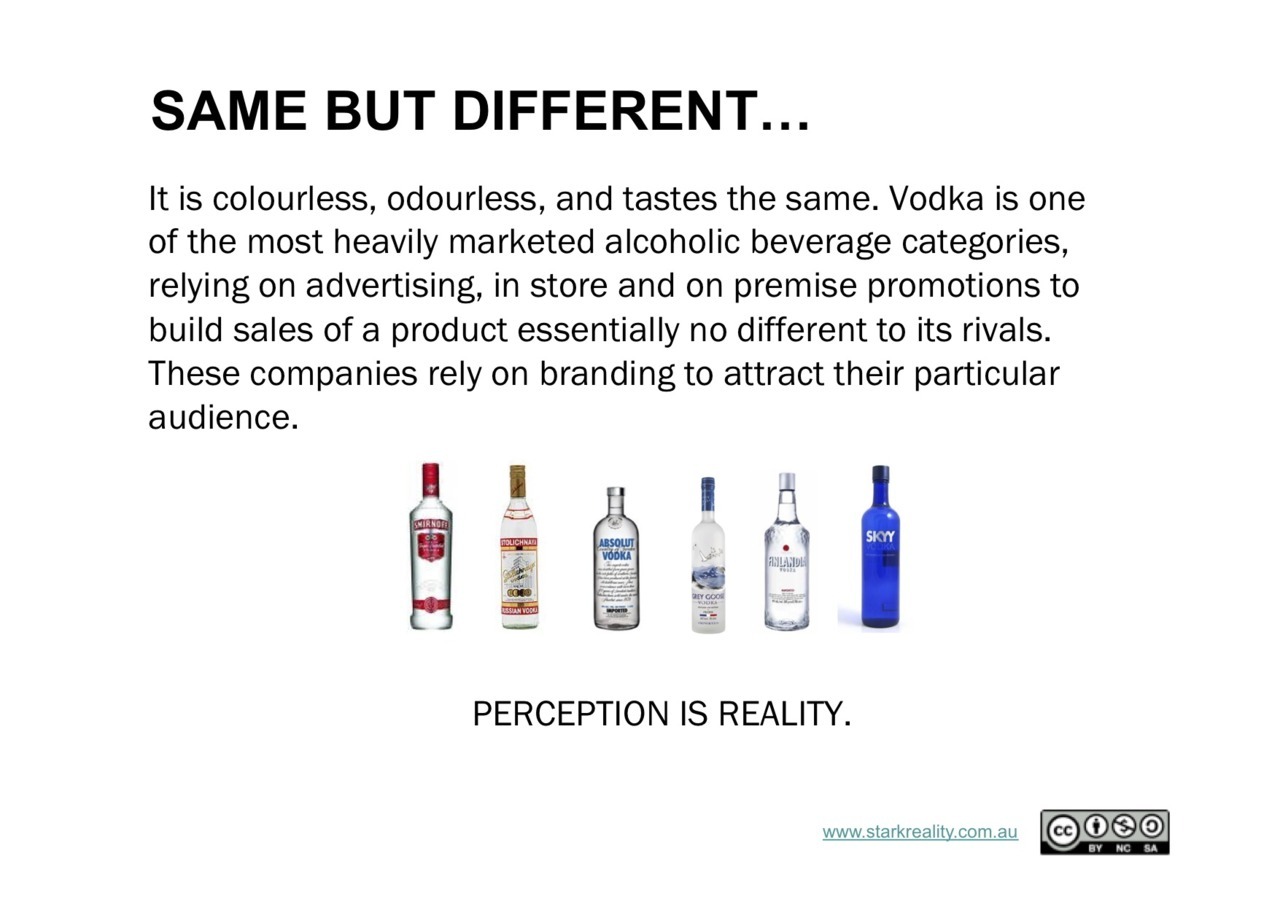
by admin | Jan 20, 2011 | Blog, Promotion
How do you differentiate your product or service when there is little or no difference?
by admin | Jan 19, 2011 | Blog, Strategy
An analysis of 55 US corporations found that brands that grew differentiation between 1993 and 1995 also grew operating profits significantly more than brands that failed to grow differentiation, and more than brands that merely increased salience.
-Du Pleiss, Advertising Likeability, Admap, UK, October 1998.


Recent Comments