by admin | Jan 9, 2012 | Blog, Promotion, Strategy
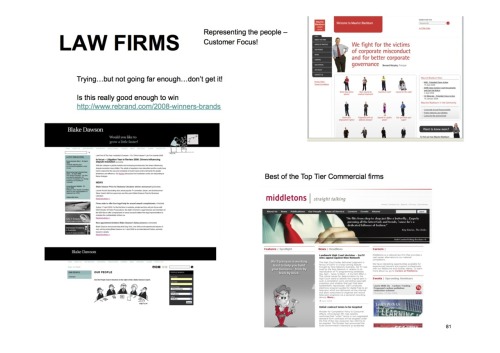
Why is it that some of our society’s brightest minds have no idea how to translate their “no holds barred” skills from the courtroom to the public domain of marketing communication in a battle to win more clients?
Maybe they just don’t need the extra business, maybe they don’t know how, or maybe the truth is a combination of arrogance and ignorance steeped in tradition! If you want to know the historical reasons why the legal profession is the way it is when it comes to brand positioning in marketing and advertising, then you’ll see an excellent exposé here:
http://www.law.com/jsp/llf/PubArticleLLF.jsp?id=1181207138051 by the (American) National Law Journal.
by admin | Jan 8, 2012 | Blog, Strategy
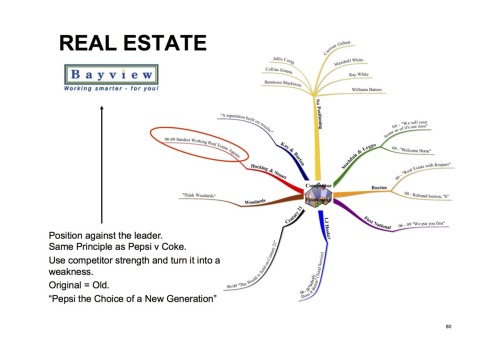
Here’s an example from the Real Estate category for one of our clients.
Using the ‘Pepsi strategy against Coke’, we have used the principal of taking a leading competitor’s strength “Hardest working Real Estate Agent” by Hocking Stuart and developing a brand positioning statement that capitalizes on their weakness:
- Everyone knows that it’s not about working harder but SMARTER
- We all have the perception of Real Estate agents being ‘sharks’ who only care about their bottom line and have hence made the Bayview positioning statement all about the buyer – YOU!
The result was “Working Smarter – For You”
It is interesting to note that Hocking Stuart, the very firm that became the marketing thought leader in their field has since changed their brand positioning twice since I first wrote this and now has no slogan or positioning statement at all! Do they now think that they are all grown up and don’t need one? I wonder how this will effect them…only time will tell and unless something drastic happens only they will know! What I am confident about is that they would have been much better off by sticking to and reinforcing their original slogan “Hardest Working Real Estate Agent”. Their size in the market (number of franchises / outlets) together with their marketing budget would have ensured their prominence and top of mind awareness in the minds of their customers and prospects.
For in depth exploration of the laws and principles of Brand Positioning in the marketplace, you can’t go past Al Ries – http://www.ries.com/.
by admin | Jan 8, 2012 | Blog
Here’s an example from the Real Estate category for one of our clients.
Using the ‘Pepsi strategy against Coke’, we have used the principal of taking a leading competitor’s strength “Hardest working Real Estate Agent” by Hocking Stuart and developing a positioning statement that capitalizes on their weakness:
- Everyone knows that it’s not about working harder but SMARTER
- We all have the perception of Real Estate agents being ‘sharks’ who only care about their bottom line and have hence made the Bayview positioning statement all about the buyer – YOU!
The result was “Working Smarter – For You”
It is interesting to note that Hocking Stuart, the very firm that became the marketing thought leader in their field has since changed their positioning twice since I first wrote this and now has no slogan or positioning statement at all! Do they now think that they are all grown up and don’t need one? I wonder how this will effect them…only time will tell and unless something drastic happens only they will know! What I am confident about is that they would have been much better off by sticking to and reinforcing their original slogan “Hardest Working Real Estate Agent”. Their size in the market (number of franchises / outlets) together with their marketing budget would have ensured their prominence and top of mind awareness in the minds of their customers and prospects.
For in depth exploration of the laws and principles of Positioning in the marketplace, you can’t go past Al Ries – http://www.ries.com/.
by admin | Oct 4, 2011 | Blog, Promotion, Strategy
According to a study by research company Millward Brown, slogan or brand positioning statement usage in advertising has been declining over the last 20 years.
The study found that slogans make a difference in advertisements, and generate more interest from the target audience. The Knowledge Point study, found that two-thirds of all ads actually included slogans.
Ads with slogans that part are of a jingle received higher enjoyment while slogans that have been used before also enjoyed better branding, confirming the importance of consistency and repetition.
The study provided the following advice to marketers and their brands:
- Positioning Statements that are most likely to be remembered are included in a jingle.
- Positioning Statements should be relevant and meaningful to the brand, its benefits or its history
- Positioning Statements used to make sense of the whole communication are memorable because they bring about a resolution to the “question” being asked
- Positioning Statements slogans that use rhyme or alliteration to associate with the brand are more easily remembered
- Positioning Statements that evoke memorable images or stimulate thinking have more staying power
- Distinct Positioning Statements, whether they contains an unusual word or are used in an unfamiliar context, were also found to be effective.
by admin | Feb 24, 2011 | Blog
…and then you can focus some more!

Recent Comments